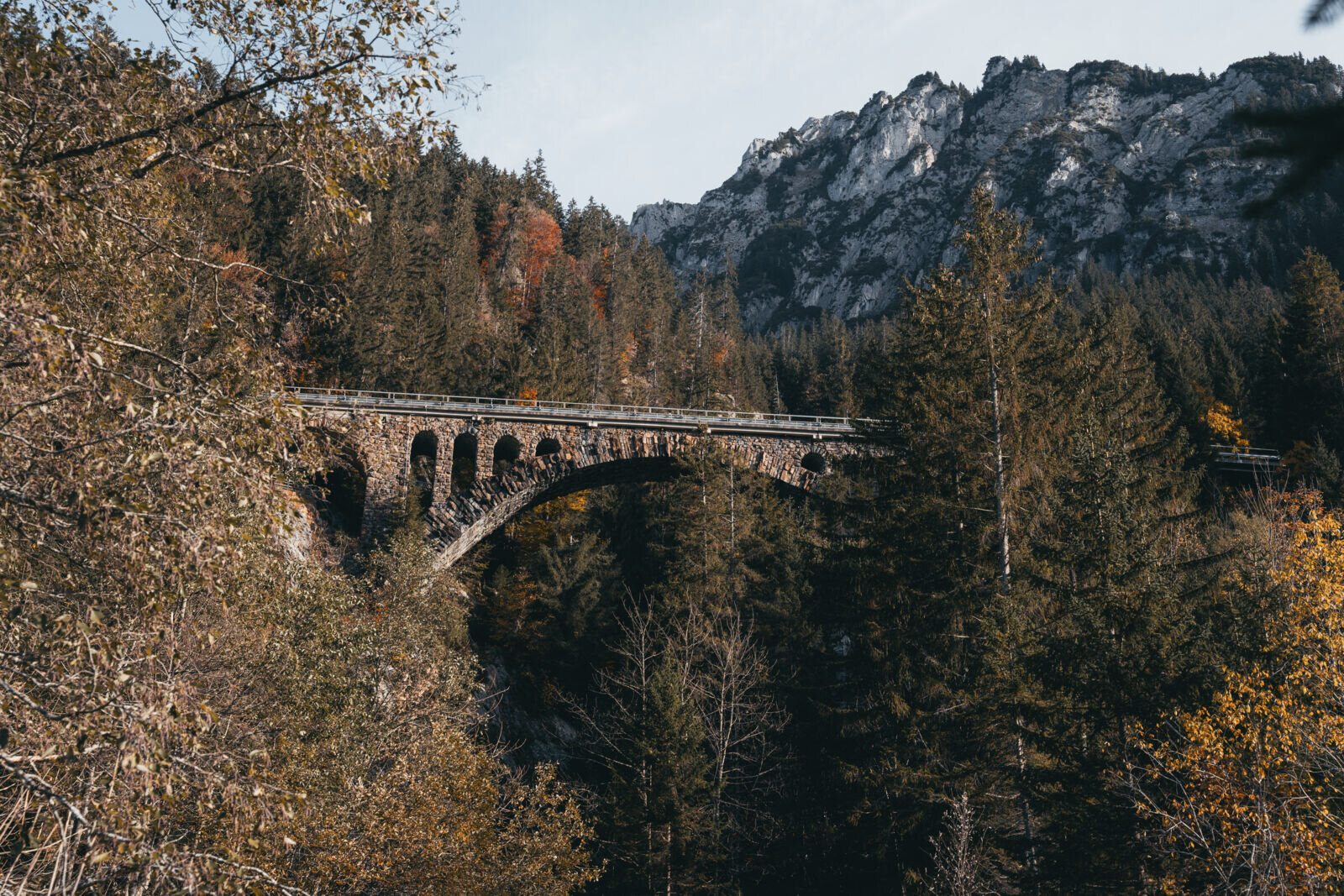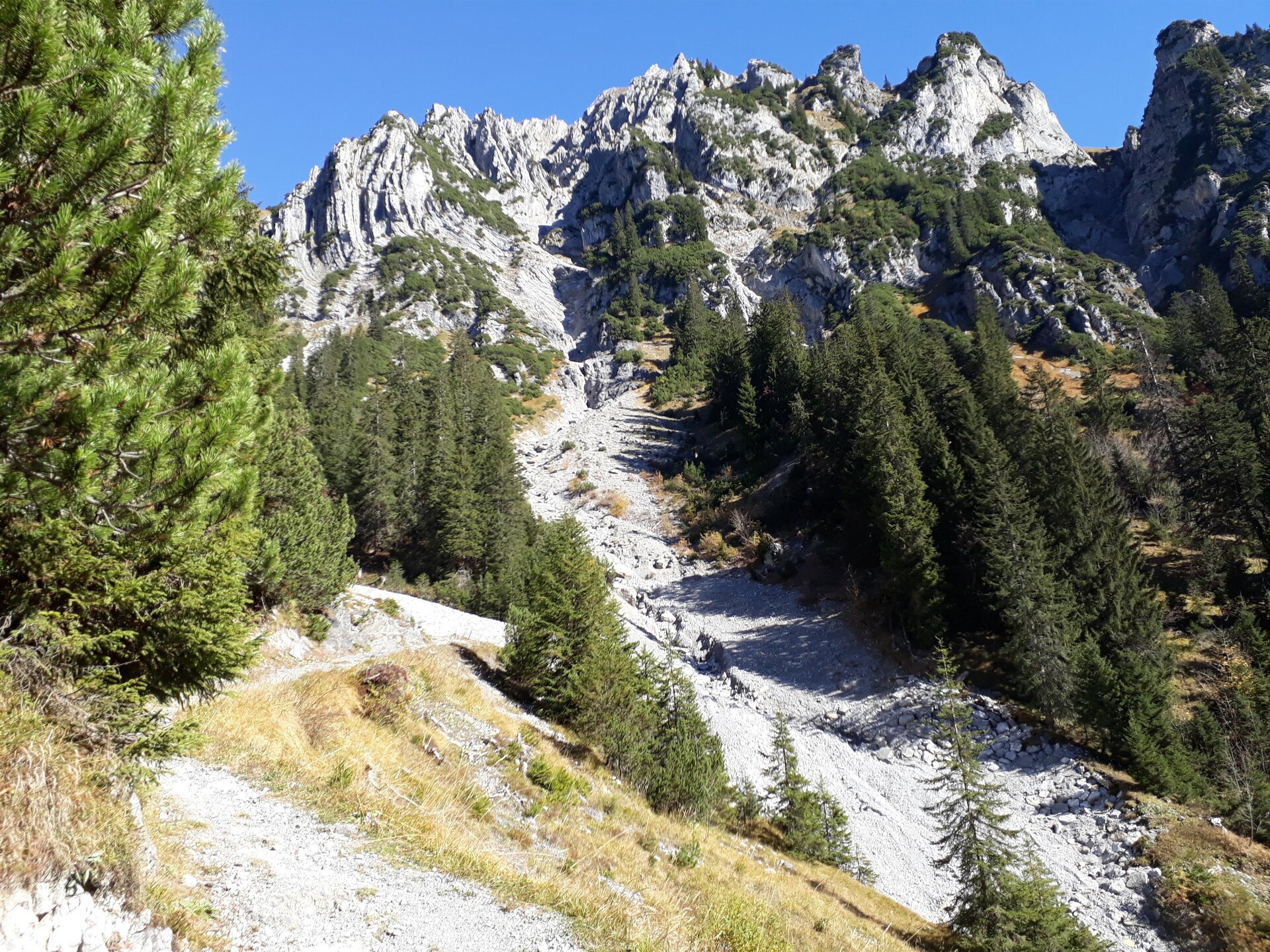
Wäldletobel: Torrent and Avalanche Control Measures
Even on an international scale, the influence of the mountainous landscape on transportation is hardly as evident in any other region as it is in the Klostertal.
The Impact of the Mountain Landscape on Transportation
Even on an international scale, the influence of the mountainous landscape on transportation is scarcely as evident in any other region as it is in the Klostertal. The natural terrain posed particular challenges during the construction of the Arlberg Railway from 1880 to 1884, as numerous viaducts and tunnels had to be built along the route. While the years of railway construction were not marked by any extraordinary weather events, the extent of the danger became apparent by 1888 at the latest, in the face of massive snowfall and numerous avalanches.
Since the end of the 19th century, over the course of more than 130 years, torrent and avalanche control measures in the Klostertal have been continuously developed. Nowhere else is this as clearly visible as on the slopes above Langen am Arlberg, particularly at the so-called “Blasegg.” This area is one of the most significant in Europe and serves as a kind of open-air museum for the development of avalanche control, as evidenced by systems such as the “Arlberg snow rake.” Many men from the municipality of Klösterle were once employed by the Lehnenpartie, whose task was to protect the railway facilities. For this purpose, snow dams were erected in the winter, while in the spring and summer, rocks were cleared and protective structures were maintained. The natural terrain conditions led to numerous route changes in the Klösterle area after 1884. With the Großtobel Tunnel and the Wildentobel Tunnel, large sections of the route were already tunneled through before World War I. The old railway line now serves as a hiking trail. In the 21st century, the final section was completed with the Blisadona Tunnel, meaning that the Wäldletobel Bridge—a sort of “landmark” of Klösterle—is no longer used by trains today.